



Right-Sizing for Sustainability: Cutting Emissions Without Cutting Freshness
9 Jul 2026
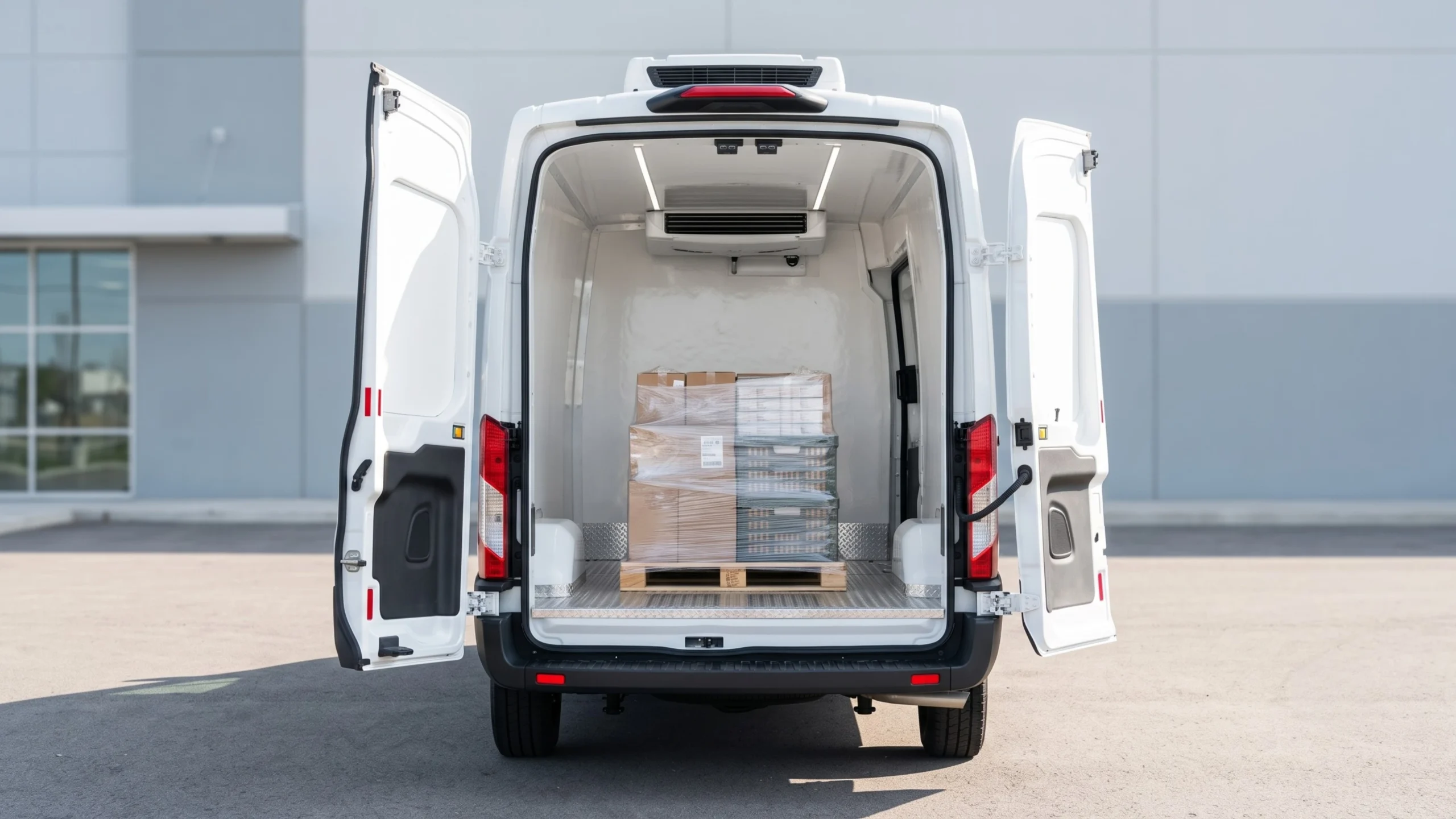
A smaller vehicle can be a sustainability decision — but only if the product stays protected.
For food, beverage, healthcare, and other temperature-sensitive products, sustainability is not just about fewer miles or less fuel. It’s about reducing waste across the whole move: empty space, excess handling, delays, rejected product, and unnecessary recovery work. That is why right-sizing matters.
Sustainability starts with fit
A shipment does not always need a full trailer. When a few pallets move in equipment built for a much larger load, you pay to haul empty space. And that affects cost, capacity, and environmental performance.
Freight efficiency programs such as EPA SmartWay work to improve supply-chain efficiency and reduce the environmental impact of freight. Their clean freight strategies include load optimization and better carrier and equipment matching to cut waste.
But right-sizing doesn’t mean choosing the smallest vehicle every time. It is about choosing the smallest appropriate vehicle for the freight, route, temperature requirement, and delivery timeline. For temperature-sensitive products, that distinction matters.
Freshness is part of sustainability
Cutting emissions is not a win if freshness suffers.
Perishable products are vulnerable to time and temperature abuse. The USDA AMS-funded guide on perishable food transport explains that quality loss is tied to both time and temperature, noting that even short periods of abuse during loading, transit, or unloading can add up to a significant excursion.
So sustainability has to include product protection. A cheaper or lower-footprint option can produce a worse outcome if it adds dwell time, more handoffs, weaker visibility, or poor temperature control.
Product loss is also waste. Rejected product wastes production, packaging, labor, transportation, and often disposal. EPA notes that more than one-third of food produced in the U.S. is never eaten, squandering the resources used to produce it and creating environmental harm.
So the goal is not simply to move with less vehicle. The goal is to move with the right vehicle and while maintaining product integrity.
The problem with the two extremes
Many teams default to one of two options.
The first is full truckload. It offers control, but often overshoots the requirements of a small refrigerated shipment. The product moves, but the oversized equipment results in unneeded expense and emissions.
The second is a partial truckload or slower less-than-truckload model. Such options are typically cheaper, but they can add stops, touches, waiting time, and less direct control. For perishables, those variables threaten freshness and raise claim risk.
Neither option is automatically wrong. But both go wrong when they do not match your shipment’s requirements. The better answer is sometimes in between.
How to right-size
To ensure you are not “shipping air,” you need to understand the shipment profile: pallet count, product sensitivity, required temperature range, pickup timing, delivery window, route distance, dock access, and documentation needs. Then learn about the trucks available, and match equipment to the shipment’s needs. The general rule of thumb is to use the smallest truck that fits the requirements. Smaller trucks generally require less fuel than larger trucks to move the same appropriately sized load, and less fuel use means fewer vehicle emissions. The principle is simple: use enough vehicle to protect the product, but not more than the shipment requires.
RVN right-sizes temperature-controlled shipments
Reefer Van Network helps your team move smaller and mid-sized temperature-sensitive shipments without forcing them into a full trailer model.
RVN provides access to right-sized refrigerated vehicles, including cargo vans, box trucks, and straight trucks for shipments from 1 to 14 pallets. That gives you more flexibility when the load needs speed, visibility, and temperature control, but not a full-size trailer.
Through the RVN Customer Portal, you can quote, book, and track shipments in one workflow, backed by real-time GPS visibility, temperature reporting, vetted capacity, and 24/7 support. The result is a more precise model: less wasted space, fewer unnecessary compromises, and stronger protection for the product.
Back to blogYou may also be interested in
Reefer Breakdown Recovery and Chain of Custody
Why recovery has to protect both the freight and the record of what happened A reefer breakdown changes more than the transportation plan. Once temperature control or vehicle movement is disrupted, the recovery process has to protect the freight while preserving a clear record of who controlled it, where it moved, and what conditions surrounded […]
Temperature Mapping Inside a Refrigerated Box Truck
How a Spatial Temperature Profile Supports Vehicle Qualification and Loading Decisions Temperature mapping turns the interior of a refrigerated box truck into a measured space. Instead of evaluating the vehicle from one temperature location, the exercise identifies where the payload area tends to run hottest, coldest, or otherwise requires closer attention under defined test conditions. […]