



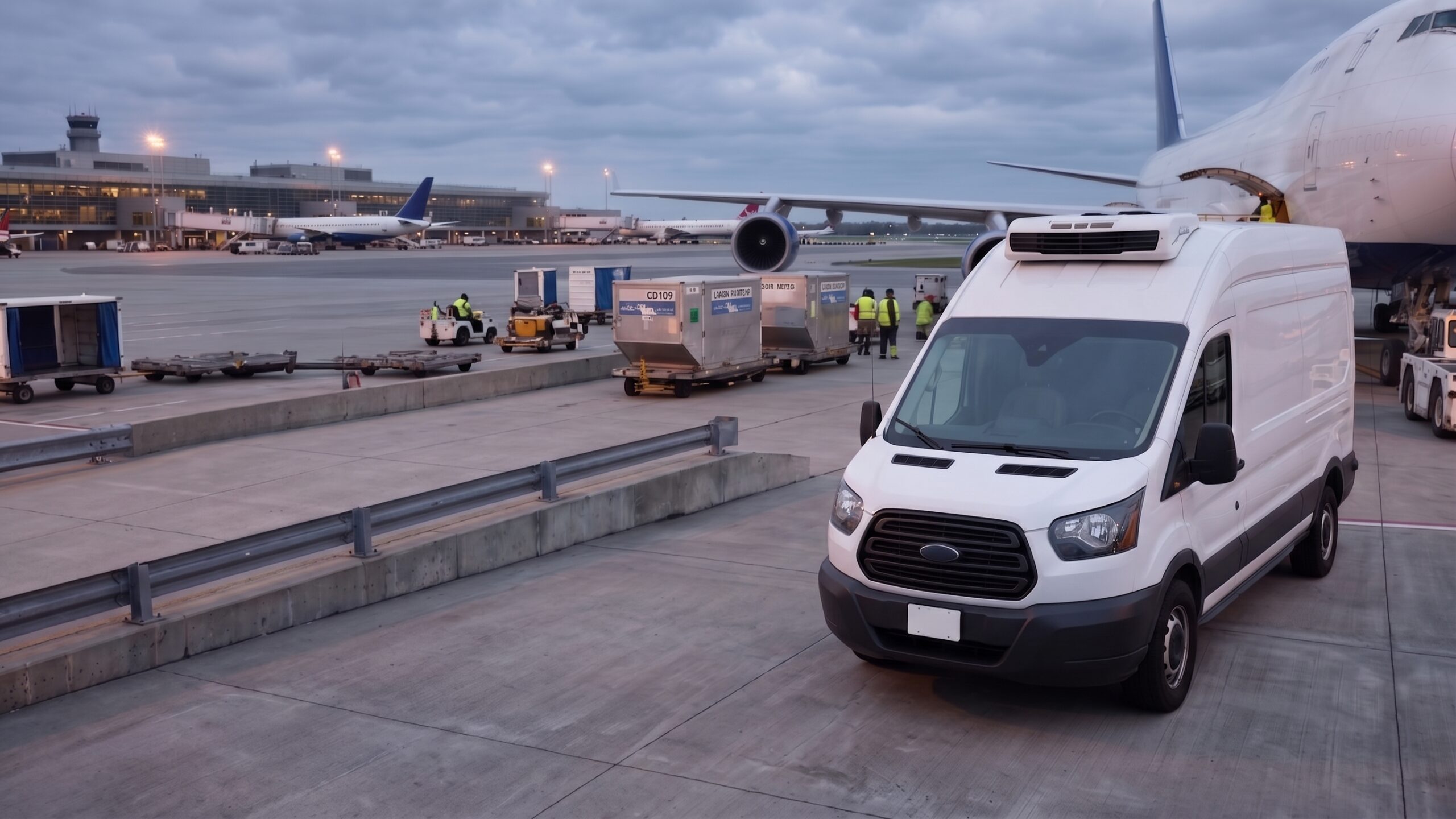
Why ULD Breakdown – not Flight Arrival – Determines Truck Dispatch Timing
A flight’s arrival time tells you when the aircraft reaches the airport. It does not tell you when the freight is ready for a truck.
For time- and temperature-sensitive cargo, that distinction can determine whether a pickup runs efficiently or turns into hours of terminal waiting. The road leg should be scheduled against cargo availability, not simply the flight schedule.
Landing Is Only the Beginning
After an aircraft arrives, cargo still has to move through the destination handling process before collection.
For ULDized freight, the Unit Load Device (ULD) must first be removed from the aircraft and transferred into the handler’s operation. A ULD is an aircraft container or an aircraft pallet-and-net combination used to group and restrain cargo during flight. IATA’s current ULD standards specifically cover ULD build-up and break-down as handling activities.
During breakdown, individual consignments are separated from the ULD and processed for onward release. The handler must identify and arrive the shipment, process the related information, and prepare the freight for transfer to the forwarder or consignee. IATA’s Cargo Handling Manual treats unloading, warehouse dispatch, shipment arrival, handover, and truck loading as distinct destination processes – not one event triggered by touchdown.
So a 2:00 p.m. landing does not automatically mean a 2:30 p.m. pickup.
Physical Availability and Customs Release Are Different Clocks
Cargo may be physically inside the terminal and still be unavailable for collection.
Imported freight must also satisfy the applicable cargo release and government requirements. U.S. Customs and Border Protection treats cargo release as a separate step in the import process. Depending on the shipment, examination or another agency requirement can delay release even after the goods have arrived.
That creates two questions before dispatch:
- Has the freight been physically broken down and made available by the handler?
- Has it been released for collection by the required authorities?
A truck dispatched before both answers are clear may simply exchange transit time for terminal dwell.
Why Early Dispatch Can Hurt Temperature-Sensitive Freight
Sending a vehicle early can look like the safest choice when the cargo is urgent. But excessive waiting creates its own problems.
The driver may consume hours at the terminal before pickup begins. A later delivery appointment can become harder to meet. If the vehicle is carrying specialized refrigerated equipment, capacity is tied up while the freight remains unavailable.
For temperature-sensitive cargo, the larger issue is coordination. Once the shipment becomes available, the handoff should happen quickly. You want the correct vehicle, temperature instructions, driver information, terminal requirements, and delivery plan settled before release – not assembled after the freight is already waiting.
This is particularly important for healthcare, seafood, specialty foods, samples, and other shipments where the international leg may have consumed much of the available transit window.
Dispatch Against Readiness, Not ETA
A stronger airport-pickup workflow starts with the flight ETA but does not dispatch from it.
The forwarder or operations team should monitor the milestones that actually make collection possible: aircraft arrival, handler receipt, breakdown or deconsolidation status, customs release, terminal availability, and any pickup appointment or documentation requirement.
Only then does truck timing become meaningful.
This does not mean waiting until the last minute to arrange transportation. The vehicle should be planned in advance. But planning the truck and releasing the truck to the airport are different decisions.
IATA’s end-to-end cargo handling model reinforces that distinction: destination handling continues through warehouse processing and transfer to the forwarder before the road leg begins.
How RVN Times the Road Leg
Reefer Van Network approaches airport pickups from the availability side of the handoff.
The vehicle is arranged before the freight is released while dispatch remains coordinated with the actual cargo status. That allows your team to prepare the correct temperature-controlled equipment, shipment instructions, delivery requirements, and driver details without sending the truck to wait against an airline ETA that may have little connection to physical availability.
Once release is confirmed, RVN moves the freight directly into the domestic road leg with right-sized refrigerated capacity, live GPS and temperature visibility, and operations coordination through delivery.
The distinction is small but operationally important: prepare from the flight schedule; dispatch from cargo readiness.
For airport freight, the useful pickup time is not when the aircraft lands. It is when the shipment can actually leave the terminal.
Back to blogYou may also be interested in
Reefer Breakdown Recovery and Chain of Custody
Why recovery has to protect both the freight and the record of what happened A reefer breakdown changes more than the transportation plan. Once temperature control or vehicle movement is disrupted, the recovery process has to protect the freight while preserving a clear record of who controlled it, where it moved, and what conditions surrounded […]

Temperature Mapping Inside a Refrigerated Box Truck
How a Spatial Temperature Profile Supports Vehicle Qualification and Loading Decisions Temperature mapping turns the interior of a refrigerated box truck into a measured space. Instead of evaluating the vehicle from one temperature location, the exercise identifies where the payload area tends to run hottest, coldest, or otherwise requires closer attention under defined test conditions. […]