



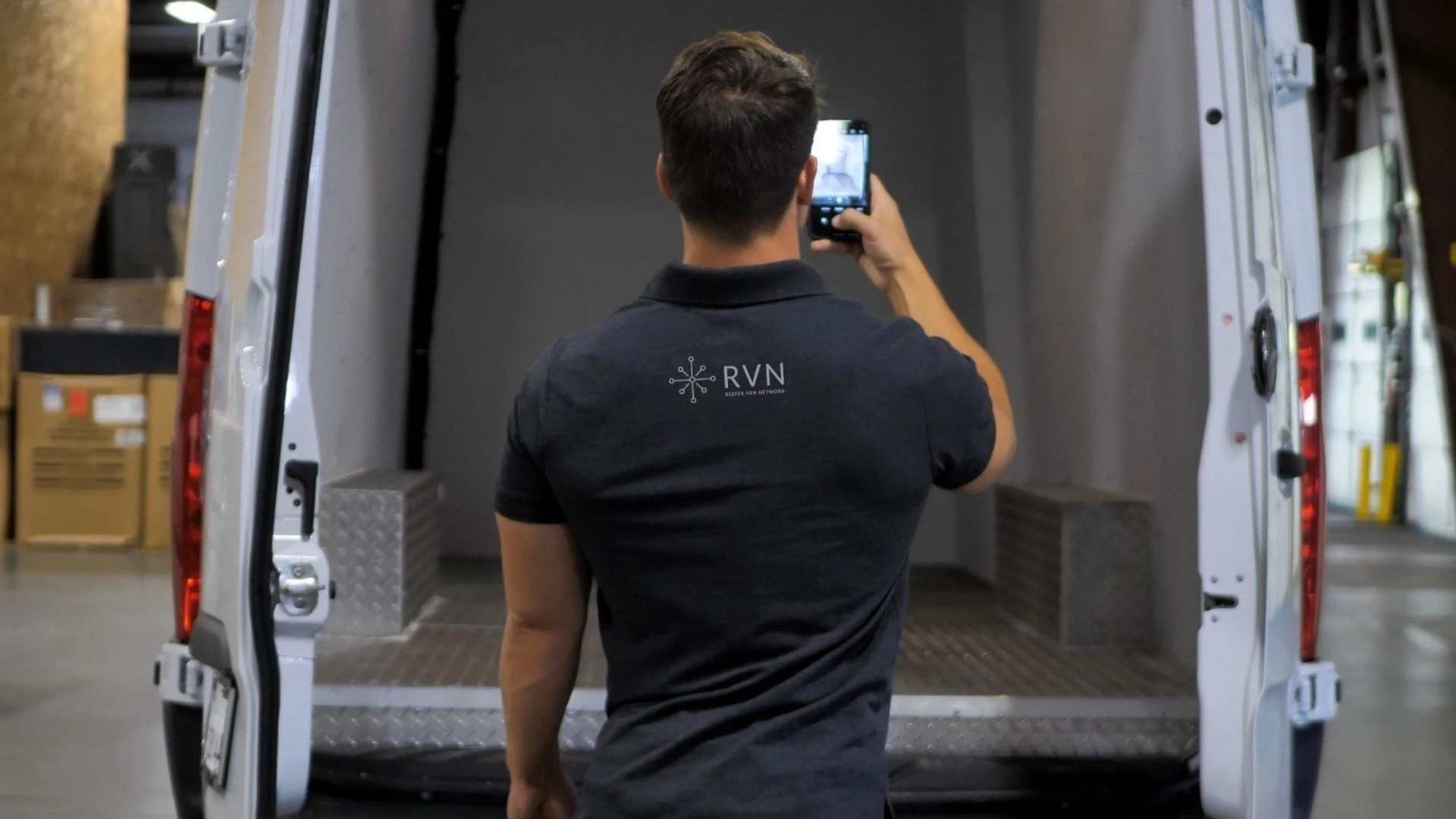
Transporting temperature-sensitive freight requires high precision and reliability. Reefer Van Network’s reefer vans follow a stringent protocol to reach this perfection, ensuring your goods remain at their perfect temperature from pickup to delivery.
Here is how we keep your freight safe throughout the journey:
Pre-Pickup Checks
Before any freight is loaded, our drivers take a control photo of the truck’s temperature sensor to confirm the vehicle is prepped and ready. Next, we check the load’s temperature and send a photo to our dispatch team for verification. Once everything is confirmed, we proceed with loading the freight.
Continuous Monitoring
When the load is approved and on the move, our dispatch team receives frequent updates on both temperature and location. Every two hours, our dispatch team keeps you informed about these updates, giving you peace of mind and control over your shipment.
Delivery Assurance
Upon reaching the destination, we conduct another temperature check inside the truck. Before unloading, we document the temperature, take photos, and provide proof of delivery to our dispatch team. Only when everything checks out can we mark the trip as completed.
Perfection is in our DNA, and this strict protocol proves it entirely. We are your trusted partner for temperature-controlled transportation. Rely on Reefer Van Network when shipping temperature-sensitive freight, and experience unparalleled precision and reliability every step of the way!
Back to blogYou may also be interested in
Reefer Breakdown Recovery and Chain of Custody
Why recovery has to protect both the freight and the record of what happened A reefer breakdown changes more than the transportation plan. Once temperature control or vehicle movement is disrupted, the recovery process has to protect the freight while preserving a clear record of who controlled it, where it moved, and what conditions surrounded […]
Temperature Mapping Inside a Refrigerated Box Truck
How a Spatial Temperature Profile Supports Vehicle Qualification and Loading Decisions Temperature mapping turns the interior of a refrigerated box truck into a measured space. Instead of evaluating the vehicle from one temperature location, the exercise identifies where the payload area tends to run hottest, coldest, or otherwise requires closer attention under defined test conditions. […]