



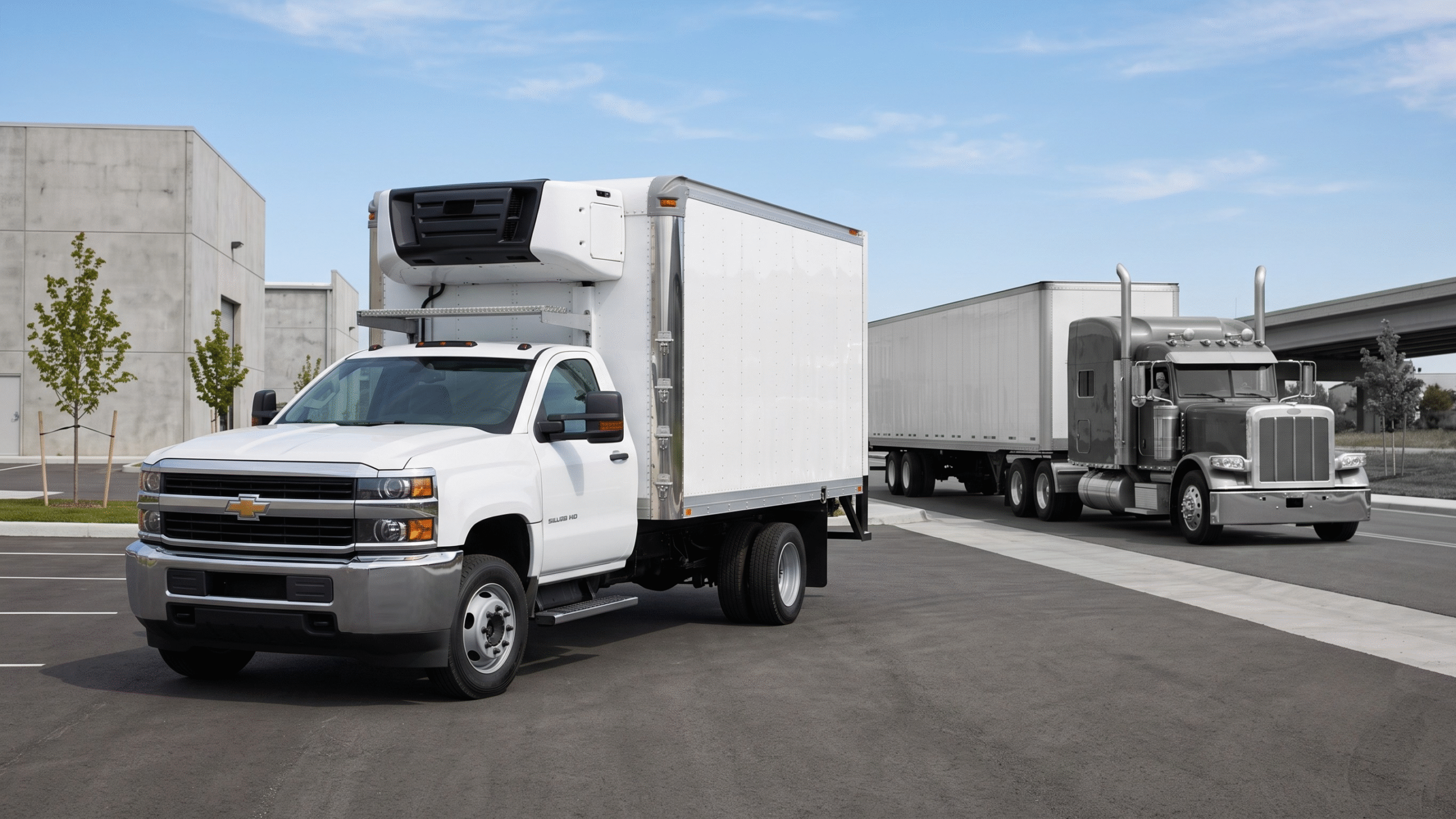
A 53’ trailer is not always the best tool for a multi-stop foodservice route.
For large, consolidated deliveries, it makes sense. But when the route involves multiple restaurants, retail locations, commissaries, catering facilities, or smaller distribution points, oversized equipment can create problems the route does not need.
The issue is not capacity. The issue is fit.
Too Much Trailer for the Route
Foodservice routes are rarely just point A to point B.
They often involve tight receiving windows, limited dock access, urban streets, small parking areas, and several stops in one run. A full-size trailer may carry the freight, but that does not mean it fits the operating environment.
The mismatch can show up quickly:
- slower access at small or crowded locations;
- more time spent positioning the vehicle;
- difficult dock or curbside delivery;
- longer door-open time during each stop;
- more unused trailer space;
- more risk when delivery sequence is not planned well.
For temperature-sensitive products, every stop matters. Each door opening, delay, or unplanned handling step can affect shipment control.
Why the Problem Happens
Many teams choose a 53’ trailer because it is familiar.
It is easy to default to the largest option when the shipment is important. But multi-stop foodservice delivery is not only about how much freight can fit inside the vehicle. It is about how well the vehicle supports the actual route.
If a route has smaller drops, frequent stops, and difficult delivery points, the wrong equipment can create extra friction. The truck may spend more time waiting, repositioning, or unloading than moving. The product may spend more time exposed during stop activity. The team may also pay for more capacity than the shipment requires.
That is where right-sizing changes the route.
The Better Fit: Reefer Box Trucks
A reefer box truck can be a stronger choice when the route needs refrigerated control, smaller capacity, and easier stop execution.
It gives your team enough protected space for smaller and mid-sized foodservice loads without forcing the route into a full-trailer model. It can also be easier to position at restaurants, small retailers, commissaries, event facilities, and dense urban delivery points.
The benefit is practical:
- better fit for smaller delivery locations;
- less unused capacity;
- faster stop execution;
- easier route sequencing;
- fewer access issues;
- tighter control for smaller refrigerated drops.
This does not mean box trucks replace trailers everywhere. They do not. But for multi-stop foodservice routes, they can reduce the mismatch between the equipment and the job.
EPA SmartWay also treats right-sizing as a freight efficiency strategy. Its clean freight materials explain that using the right vehicle for the task can improve fuel efficiency, and that downsizing from a Class 7 truck to a Class 6 truck improves fuel efficiency by 9% on average.
Less unnecessary capacity can mean less wasted fuel. Less wasted fuel means fewer vehicle emissions.
How RVN Supports Multi-Stop Foodservice Routes
Reefer Van Network helps customers move smaller and mid-sized temperature-sensitive freight with right-sized refrigerated equipment.
For foodservice routes, RVN can support shipments with reefer vans, box trucks, and straight trucks when a full trailer is more capacity than the route needs. That helps match the vehicle to the delivery profile instead of forcing smaller drops into oversized equipment.
RVN also supports these moves with real-time GPS visibility, temperature reporting, vetted capacity, and 24/7 operations support. Through the RVN Customer Portal, your team can quote, book, and track shipments in one workflow.
That matters when route timing changes, a receiving location creates a delay, or a stop needs tighter coordination. Multi-stop foodservice delivery depends on active control, not just available space.
Conclusion
A 53’ trailer is useful when the load and route justify it.
But when foodservice freight moves through smaller stops, tighter access points, and multiple delivery windows, a reefer box truck may be the better fit.
The right vehicle can reduce unused capacity, improve route execution, support better fuel efficiency, and help protect product quality across every stop.
Reefer Van Network helps make that possible with right-sized refrigerated vehicles, live visibility, and operations support built for time- and temperature-sensitive freight.
Back to blogYou may also be interested in
Reefer Breakdown Recovery and Chain of Custody
Why recovery has to protect both the freight and the record of what happened A reefer breakdown changes more than the transportation plan. Once temperature control or vehicle movement is disrupted, the recovery process has to protect the freight while preserving a clear record of who controlled it, where it moved, and what conditions surrounded […]
Temperature Mapping Inside a Refrigerated Box Truck
How a Spatial Temperature Profile Supports Vehicle Qualification and Loading Decisions Temperature mapping turns the interior of a refrigerated box truck into a measured space. Instead of evaluating the vehicle from one temperature location, the exercise identifies where the payload area tends to run hottest, coldest, or otherwise requires closer attention under defined test conditions. […]