



In temperature-controlled logistics, every degree and every hour matter. Many businesses believe they’ve built strong reefer networks that can handle any demand, but the reality is that hidden inefficiencies often lurk beneath the surface. These gaps don’t always appear in daily operations, but when something goes wrong, such as a lane surge, a weather disruption, or a missed connection, they suddenly become painfully obvious.
The true danger is that these unseen gaps quietly chip away at profit margins, weaken delivery performance, and expose temperature-sensitive cargo to unnecessary risk. By identifying where the cracks are and addressing them early, businesses can transform reefer transport from a fragile link into a resilient advantage.
Here are three critical reefer network gaps you may not realize you have, and how to close them before they cost you.
Coverage Blind Spots in Key Markets
On paper, your carrier network may look extensive. But when a last-minute load needs to move out of a rural hub, across a border crossing, or from a secondary airport, coverage suddenly thins out. These blind spots cause ripple effects: scrambling for last-minute carriers, paying higher spot rates, or worse, delaying time-critical shipments.
Industries such as pharmaceuticals, fresh food, and chemicals can’t afford those gaps. A missed pickup in a farming region can mean wasted perishables; a late reefer truck at a border could mean regulatory fines or rejected cargo.
Solution: Partner with carriers and networks that don’t just claim nationwide reach, but actually prove it through regional density and specialized coverage. Leveraging a network that maps carrier strength by lane and zone ensures businesses can plan with confidence, even in less common markets.
Poor Visibility Between Modes
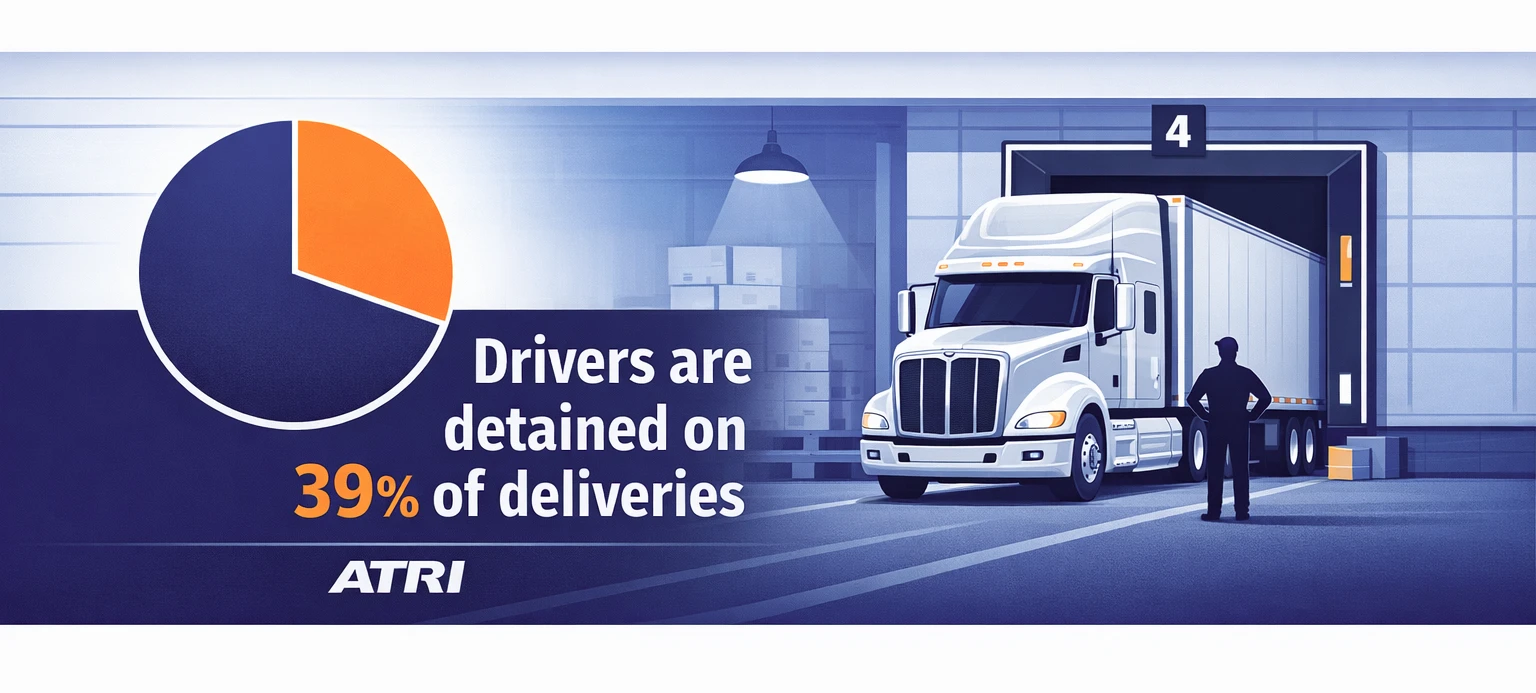
Reefer cargo doesn’t just move on trucks. It passes through airports, seaports, warehouses, and sometimes rail yards. The critical handoff points between these modes often go unmonitored, creating dangerous blind spots. Those handoffs are also where time slips: ATRI has found drivers are detained on 39% of deliveries, which means sensitive freight can sit longer than planned at facilities and transfer points. If temperature is maintained inside the truck but not during the two-hour dwell at a terminal dock, the integrity of the shipment is still compromised.
Lack of visibility at these transitions is one of the leading causes of spoilage or product rejection, even when the linehaul itself runs smoothly. Without reliable data, businesses can’t proactively address delays, equipment failures, or mishandling at those points.
Solution: Work with providers who offer integrated visibility platforms across all modes. GPS tracking, temperature logging, and dwell-time monitoring at handoff points ensure the chain of custody is fully transparent. This reduces risk, strengthens compliance, and provides data for quality audits.
Overreliance on Spot Freight
The spot market can feel like a lifeline during busy seasons. But relying too heavily on it is actually a liability. Spot capacity often comes with volatile pricing, inconsistent quality, and little accountability. For temperature-sensitive cargo, those risks are magnified.
During produce peaks, for instance, the competition for reefer trucks can drive rates sky-high. At the same time, spot carriers may not always have the same reliability or experience as contracted partners. This unpredictability can mean missed deadlines, late deliveries, and product spoilage, costs that far outweigh the short-term flexibility spot freight provides.
Solution: Balance your strategy. Use contracted reefer capacity as a backbone for reliability and complement it with vetted spot freight only when necessary. This blend ensures consistent service without leaving you vulnerable to sudden market swings.
How RVN Closes the Gaps
At Reefer Van Network, we understand that the real challenge in temperature-controlled logistics lies in finding trucks and building resilience into your network. That’s why RVN is structured to eliminate these hidden vulnerabilities:
- National and regional depth. Our carrier base covers both high-volume lanes and overlooked regions, ensuring consistent coverage where others fall short.
- Seamless visibility. RVN integrates technology that tracks shipments across every mode, including those critical handoff points. Customers get real-time temperature and location data, reducing risk and improving accountability.
- Balanced capacity options. We offer a smart mix of contracted and vetted spot carriers, providing customers with stability during regular flows and flexibility during peak demand, without compromising quality.
By partnering with RVN, customers can stop worrying about blind spots, broken visibility, or unreliable spot options. Instead, they gain a stronger, more predictable temperature-controlled logistics built to protect margins and safeguard product integrity.
Conclusion
The reefer network gaps you don’t see are the ones most likely to disrupt your business. Coverage blind spots, weak visibility at modal transitions, and overreliance on the spot market are common pitfalls that undermine reliability of temperature-controlled logistics. The good news? These challenges aren’t permanent. They can be solved with the right strategy and the right partner.
With Reefer Van Network, customers can transform their reefer logistics from a patchwork of vulnerabilities into a connected, resilient, and future-ready network. Don’t let hidden gaps control your refrigerated transport. Close them before they cost you.
Back to blogYou may also be interested in

Passover Food Transportation with Reefer Van Network
Passover food is not just another seasonal commodity. The Passover production window is a short, high-stakes period where product status, timing, handling, and temperature control all matter at once. Production runs are tightly scheduled. Inventory windows are narrow. And everything must be done on time. Seders cannot be adjusted to supply chain delays. That is […]

Fast Isn’t Enough: Ensuring Cold Freight Is Also Monitored and Documented
In temperature-controlled logistics, speed matters, but it’s not the whole story. When it comes to moving pharmaceuticals, produce, dairy, meat, or other perishable goods, how fast you deliver matters far less than how well you control, monitor, and prove your temperature compliance along the way. Even the fastest shipment can fail if it arrives compromised. […]