



0–14 Pallets: When a Reefer Van or Box Truck Is More Economical Than LTL or Full Truckload
2 Sep 2026
Why Right-Sized Refrigerated Equipment Can Lower Operating Costs
For refrigerated loads of 0–14 pallets, transportation economics depend on more than the quoted rate. The real comparison is whether the service adds handling, delay, or vehicle size that the shipment does not need.
For temperature-sensitive freight, a cheaper line item may become an expensive move when extra touches, missed timing, temperature questions, or recovery work enter the picture.
Compare the Whole Move, Not Just the Rate
LTL is designed around shared trailer space. That can be cost-effective for freight that fits the network, and NMFTA notes that LTL pricing reflects factors such as dimensions, weight, density, distance, classification, volume, and handling requirements.
Shared service, however, changes the operating model. Consolidation, terminal handling, and scheduled network movement may add steps that are absent from a dedicated point-to-point move. Those steps are not inherently wrong; they simply carry more weight when product condition, timing, and traceability matter.
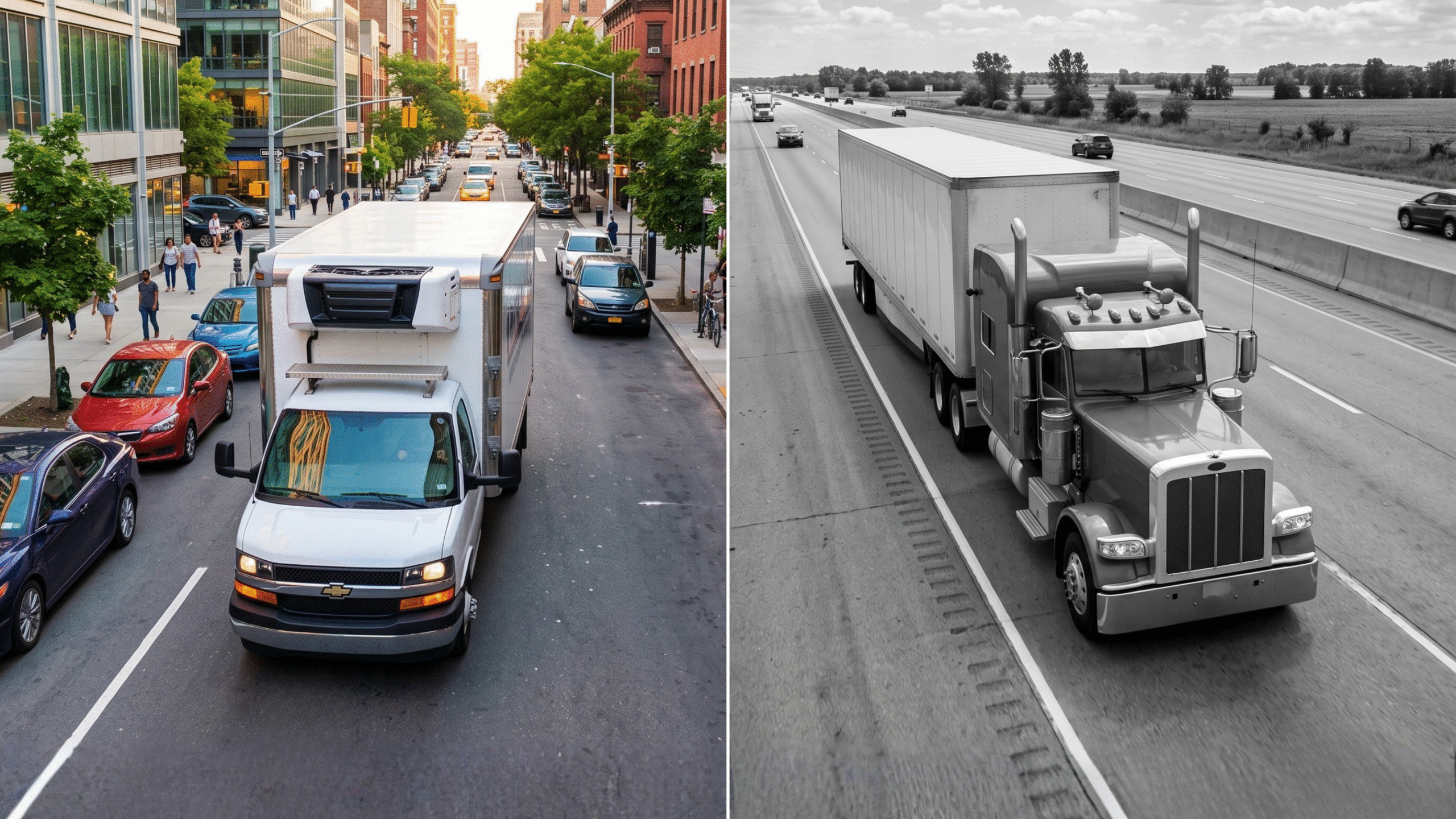
Full truckload solves the opposite problem by providing dedicated space and a simpler route structure. But when a refrigerated load occupies only a small share of the available room, part of the transportation spend is buying space that adds no value to the shipment.
For 0–14 pallets, the economic question sits between those two models.
Why Right-Sizing Changes the Math
A right-sized refrigerated vehicle keeps the equipment closer to the actual load. EPA SmartWay defines rightsizing as matching the vehicle to the task and freight requirement, and its guidance links appropriately smaller equipment with better fuel efficiency in applicable operations.
The same principle applies commercially. A smaller dedicated vehicle may avoid paying for excess space while preserving a direct service model. The value becomes stronger when the freight also requires tight pickup timing, limited handling, temperature monitoring, or fast delivery.
That does not make a reefer van or box truck automatically cheaper than LTL or full truckload. Lane, distance, pallet dimensions, weight, temperature range, urgency, and local capacity still affect the rate. The advantage appears when the smaller vehicle removes cost without removing control the shipment still needs.
The RVN Model: Dedicated Control at the Right Scale
Reefer Van Network is built around small refrigerated loads. RVN supports shipments from 0 to 14 pallets with cargo vans, box trucks, and straight trucks selected around the actual freight requirement.
The model keeps the load on dedicated equipment while adding live temperature reporting, GPS visibility, and 24/7 logistics support. RVN’s Customer Portal also provides instant rate estimates for small refrigerated loads, booking, quote management, and real-time shipment tracking.
That makes the cost comparison easier to frame. Instead of choosing only between shared service and oversized dedicated equipment, a smaller temperature-sensitive shipment can use a vehicle sized for the job while retaining direct transportation and in-transit visibility.
Buy Capacity That Adds Value
LTL, full truckload, and right-sized dedicated service each solve a different transportation problem.
For 0–14 pallet refrigerated loads, the most economical choice is the one that balances the quoted rate with handling, timing, visibility, temperature requirements, and the cost of failure. When larger equipment adds space but no operational benefit, right-sizing can improve the economics without weakening shipment control.
Back to blogYou may also be interested in
Reefer Breakdown Recovery and Chain of Custody
Why recovery has to protect both the freight and the record of what happened A reefer breakdown changes more than the transportation plan. Once temperature control or vehicle movement is disrupted, the recovery process has to protect the freight while preserving a clear record of who controlled it, where it moved, and what conditions surrounded […]

Temperature Mapping Inside a Refrigerated Box Truck
How a Spatial Temperature Profile Supports Vehicle Qualification and Loading Decisions Temperature mapping turns the interior of a refrigerated box truck into a measured space. Instead of evaluating the vehicle from one temperature location, the exercise identifies where the payload area tends to run hottest, coldest, or otherwise requires closer attention under defined test conditions. […]